A small piece of paper, a pen that was running out of ink, and a list in Bengali. That was my entire plan for the day.
I was standing on a North Kolkata pavement with that slip in my hand. A chai stall was doing brisk business behind me, a rickshaw was squeezing through a gap that did not exist, and I was trying to work out which old house on my list was the closest. No app, no polished itinerary. Just 13 names of old family houses, a couple of arrows and a lot of walking.
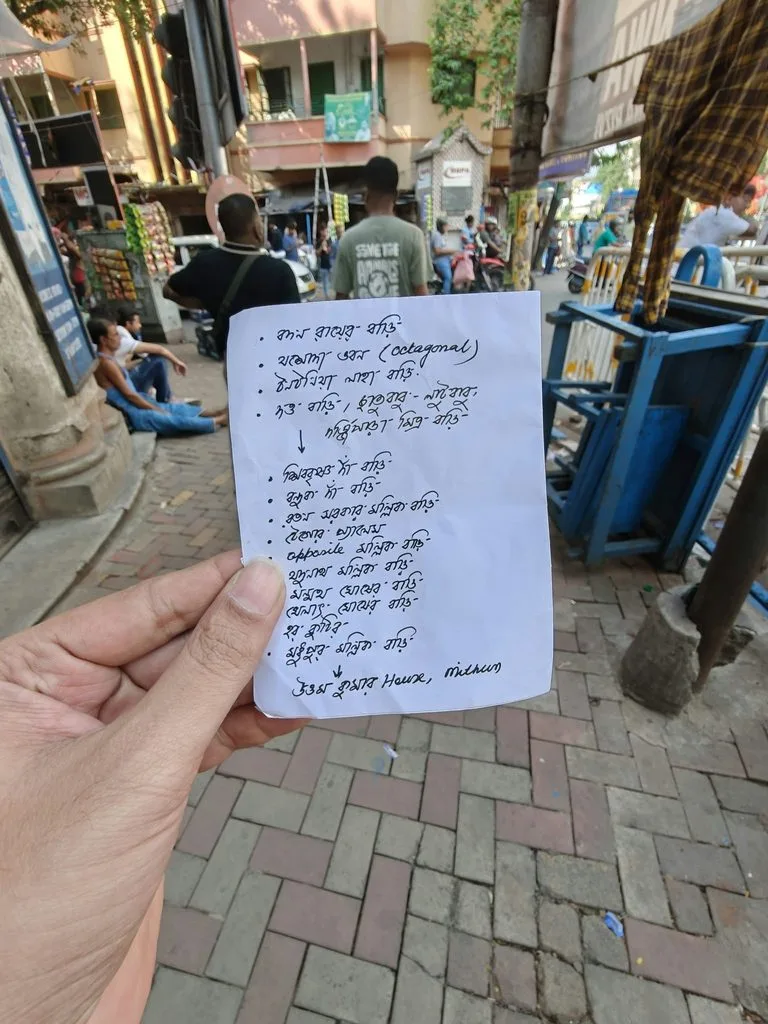
This blog is that slip, cleaned up and put in order. If you want to see Bonedi Bari Durga Puja in Kolkata the way it was meant to be seen, in the pillared courtyards of old merchant and zamindar families and not in a queue outside a pandal, this is the route. Save it. You will want it on Ashtami morning.
Durga Puja 2026 runs from 16 to 21 October, so there is still time to plan this week.
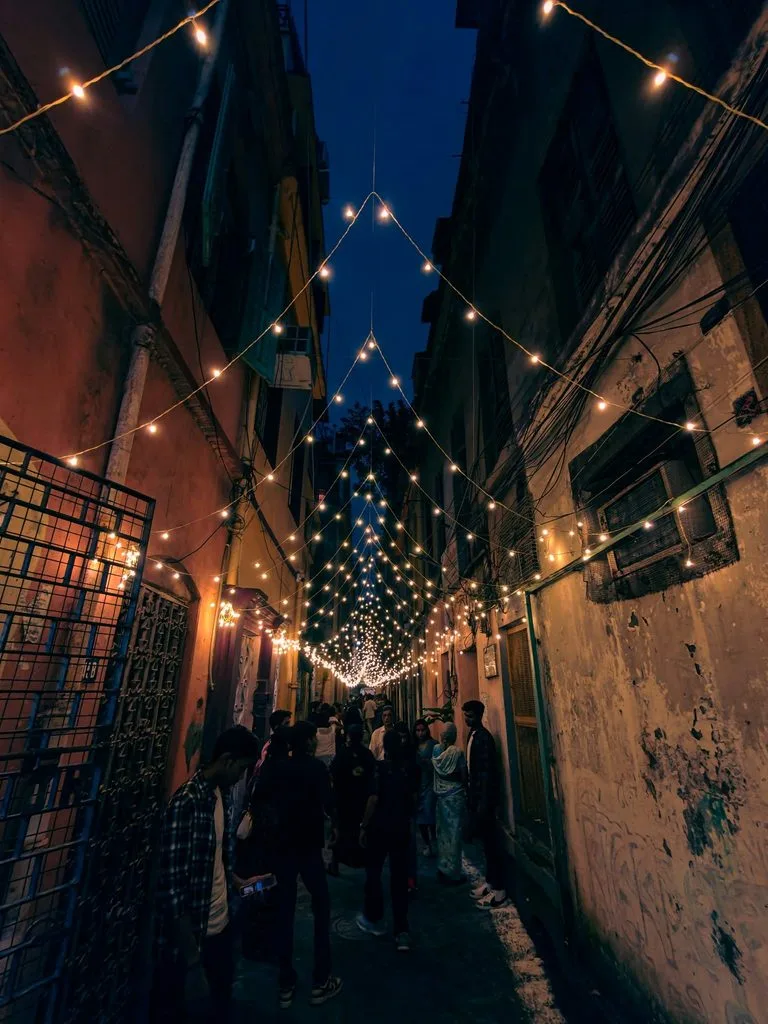
What is a Bonedi Bari Durga Puja?
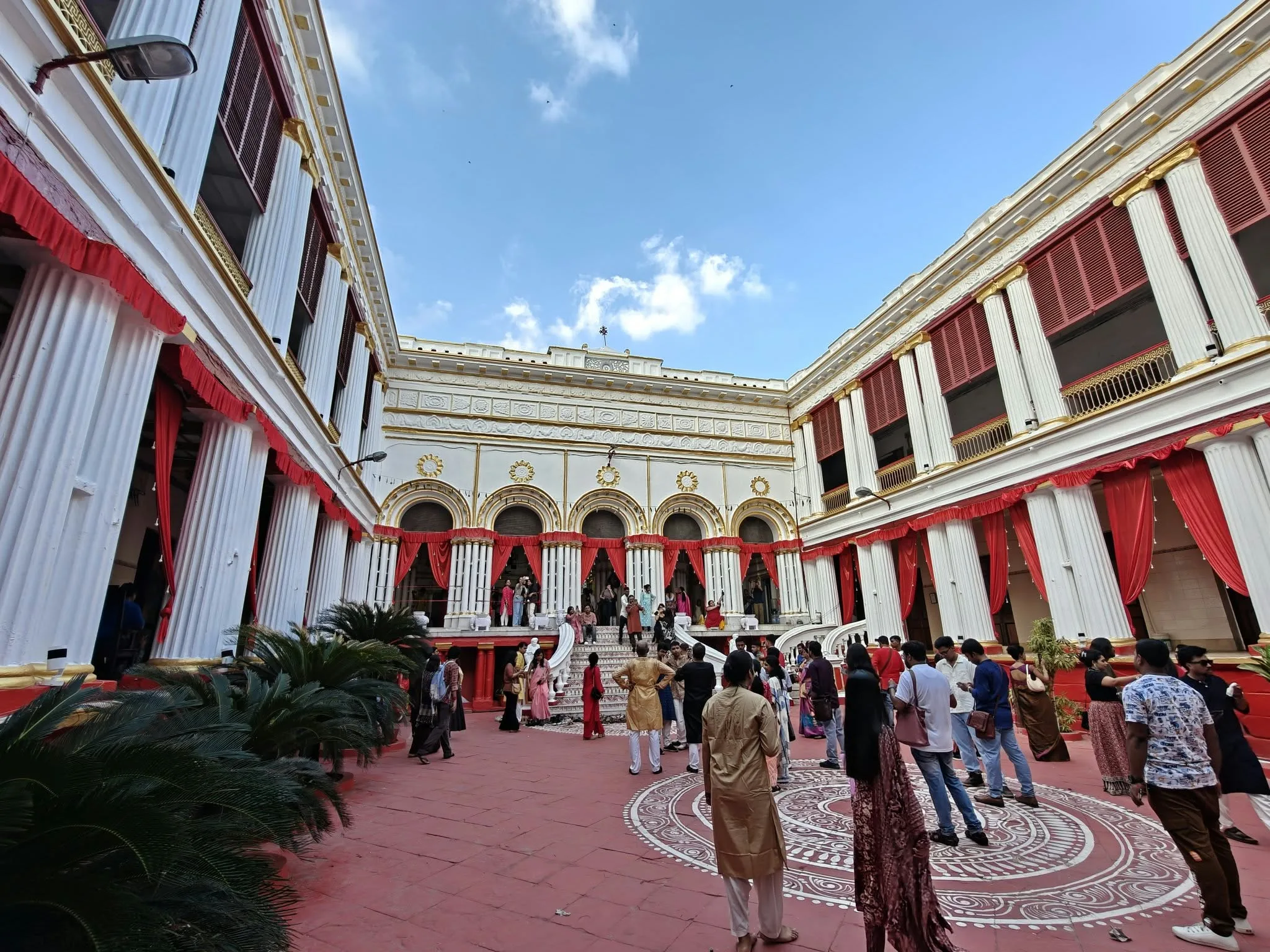
“Bonedi” means old and aristocratic, and “bari” means house. A Bonedi Bari puja is the Durga Puja of an old family, held inside the family home and not on a street. It happens in the thakur dalan, the pillared courtyard built only for the goddess. For generations, this is how Kolkata celebrated Durga Puja. The community pandals and themes came much later (Outlook Traveller).
Each family has its own rituals, its own idol style, its own bhog and its own stories. That is why a Bonedi Bari walk never feels repetitive. One house fires guns at Sandhi Puja, another puts the goddess on Shiva’s lap, and a third has no ritual at all and fills the courtyard with music instead. Durga Puja in Kolkata was added to UNESCO’s intangible cultural heritage list in 2021. For the wider background, here is the Wikipedia page on Durga Puja.
Bonedi Bari Durga Puja 2026: quick facts
| Detail | What to know |
| Puja dates | 16 to 21 October 2026. Maha Ashtami is on Monday 19 October. |
| Sandhi Puja | Listed as 10:27 to 11:15 am on 19 October in published Kolkata calendars. Each house follows its own panjika, so check with the family. |
| Area | Colootola, Thanthania, Beadon Street, Darjipara, Jorasanko and Pathuriaghata. That is Central and North Kolkata. |
| Nearest metro | Girish Park (Blue Line) for most of the route. Sovabazar Sutanuti is also close to Pathuriaghata. |
| Entry | Private family homes. Many receive visitors during Puja, but check each house on the day. |
| Time needed | Two relaxed mornings, or one very long day. |
| Best time | Mornings. Evenings from Saptami onwards get crowded. |
How to reach and get around
Central and North Kolkata are old, compact and badly jammed during Puja. The lanes are narrow and often one-way, so this is a walking route. We only used a vehicle for the long hops between clusters.
| Option | Details |
| Metro | Take the Blue Line to Girish Park. Darjipara Mitra Bari is about 490 m from the station (Pujo Map), and Pathuriaghata is served by Girish Park and Sovabazar Sutanuti (Wikipedia). Metro timings get extended during Puja, so check the latest timetable. |
| By train | Get down at Howrah or Sealdah, then take the metro or a cab. |
| By air | Netaji Subhash Chandra Bose International Airport to your hotel by cab, then use the metro for the walk. |
| Last mile | Walk where you can. Use an auto or app cab for the long hops. In the evenings, some roads are closed or made one-way, so follow the barricades. |
The route: 13 Bonedi Baris in the order on my slip
The first two houses are around Colootola and Thanthania. Then comes a tight cluster on Beadon Street and in Darjipara, and then Jorasanko. The last five are strung along Pathuriaghata Street and its side lanes.
| # | House | Area | Quick note |
| 1 | Badan Roy Bari | Colootola | Puja since about 1857–58 |
| 2 | Madho Bhawan | CR Avenue | Octagonal house |
| 3 | Thanthania Laha Bari | Thanthania | Check if open or not |
| 4 | Dutta Bari | Thanthania | Hara-Gouri idol, puja since 1855 |
| 5 | Chhatu Babu–Latu Babu Bari | Beadon Street | Puja since about 1770 |
| 6 | Darjipara Mitra Bari | Darjipara | Daily Kumari Puja, white lion |
| 7 | Shib Krishna Daw Bari | Jorasanko | Famous for jewellery on the goddess |
| 8 | Banduk Daw Bari | Jorasanko | Guns fired at Sandhi Puja |
| 9 | Tagore Palace | Pathuriaghata | Music and dance festival, no formal ritual |
| 10 | Jadunath Mullick Bari | Pathuriaghata | Thakur dalan with iron arches |
| 11 | Manmatha Ghosh Bari | Pathuriaghata | Ghosh family puja began at No. 46 |
| 12 | Khelat Ghosh Bari | Pathuriaghata | 47 Pathuriaghata Street, the grand one |
| 13 | Harakutir (Hara Kutir) | Pathuriaghata | 53 Pathuriaghata Street, 300+ years |
Part 1: Colootola, Thanthania and Beadon Street
Stop 1: Badan Roy Bari, Colootola
We started in Colootola, between College Street and Chittaranjan Avenue. Turn off Central Avenue into Gopal Chandra Lane and the noise of the city drops. High brick mansions, faded green shutters, and at 2A Gopal Chandra Lane a heavy wooden gate that leads into the home of Badan Chandra Roy (Durga Puja Pandals).
This is one of the older family pujas in this part of the city. Most sources put the start around 1857 or 1858 (it is listed as established 1857 on one directory and since 1858 on another), which makes it roughly 168 to 170 years old (Durga Puja Kolkata, massArt). During the preview days, the thakur dalan has hosted dhunuchi naach, putul naach, chhau and jatra pala. That gives a feel of how the house treats the festival as culture and not just ritual.
Stop 2: Madho Bhawan
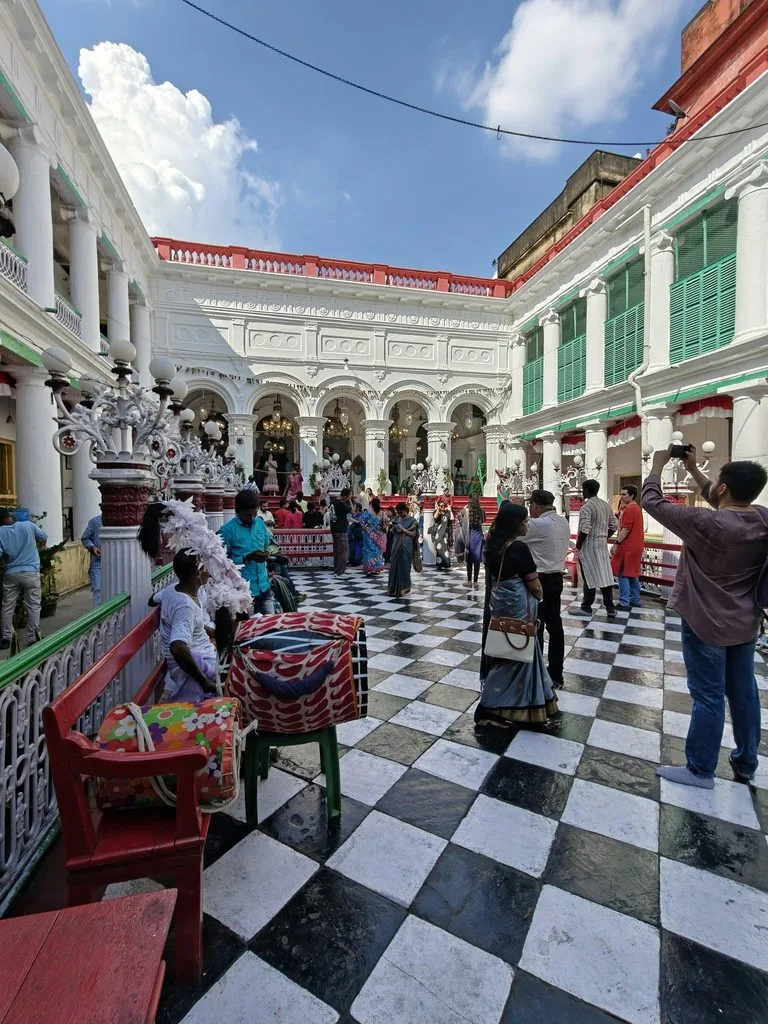
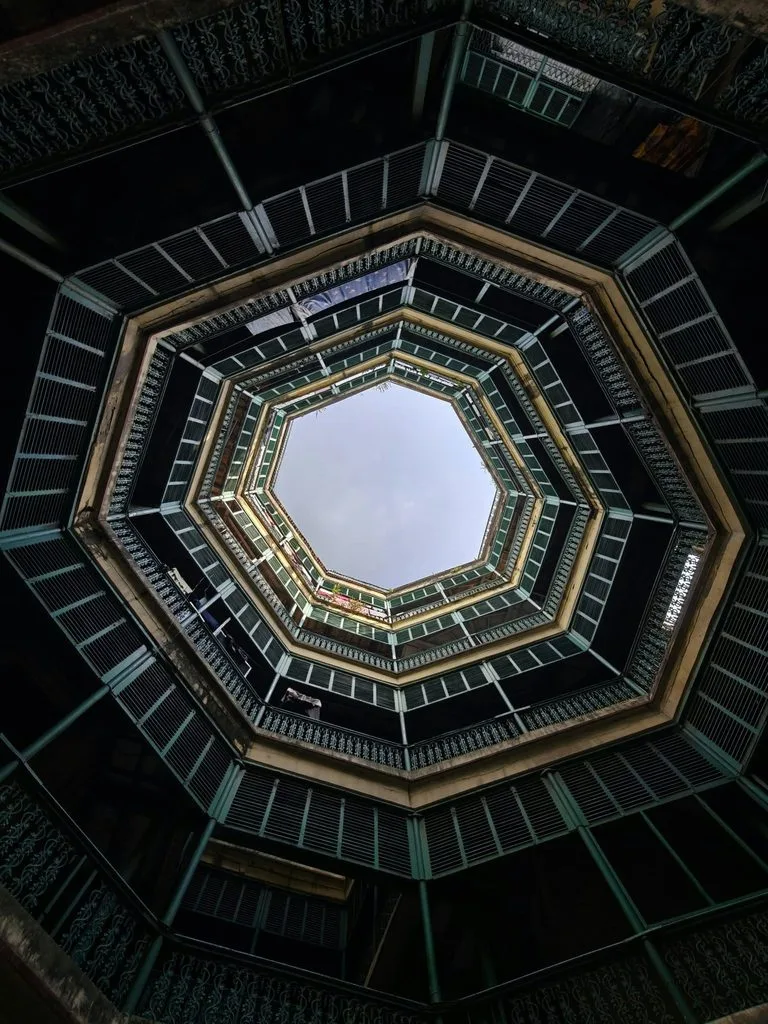
Built in 1922, Madho Bhawan is believed to have been the first stop for countless travellers arriving in Calcutta from Rajasthan—stepping off trains at Howrah Station and entering the vibrant heart of the city. With its striking octagonal design, the building remains a distinctive landmark, carrying within its walls a fascinating slice of Kolkata’s history.
Stop 3: Thanthania Laha Bari
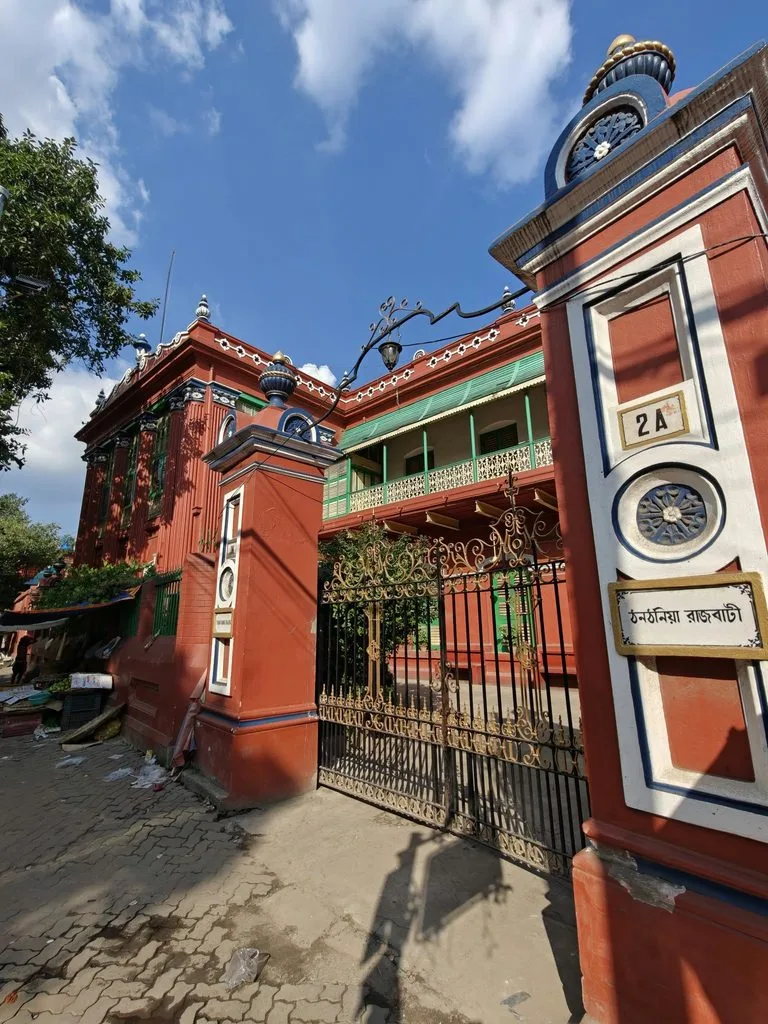
Thanthania is the neighbourhood around the famous Thanthania Kali Bari, and the Laha Bari is one of the family houses there that hold Durga Puja.
Stop 4: Dutta Bari, Thanthania
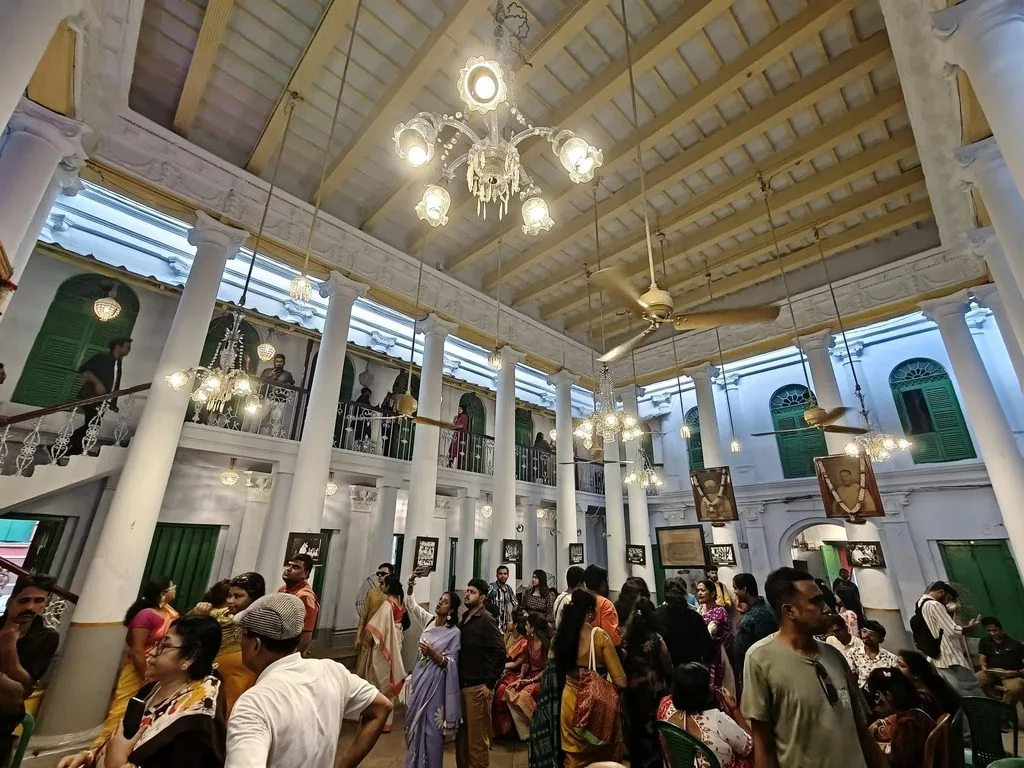
The Dutta Bari stands at 3 and 4 Cornwallis Street, now Bidhan Sarani. Dwarkanath Dutta started the puja here in 1855 (Desher Samay, PUJO2PUJO).
What stays in your mind is the idol. Instead of the usual demon-slaying Mahishasuramardini form, Durga sits calmly on Shiva’s lap as Hara-Gouri, with a gentle smile and no Asura. The family is Vaishnava, and the household deities are Sridhar Jiu and Lakshmi. On Ashtami, women of the house sit with burning dhuno on earthen pots on their heads, a ritual called Dhuno Porano. The special offering here is atap rice and ground sugar.
Stop 5: Chhatu Babu–Latu Babu Bari, Beadon Street
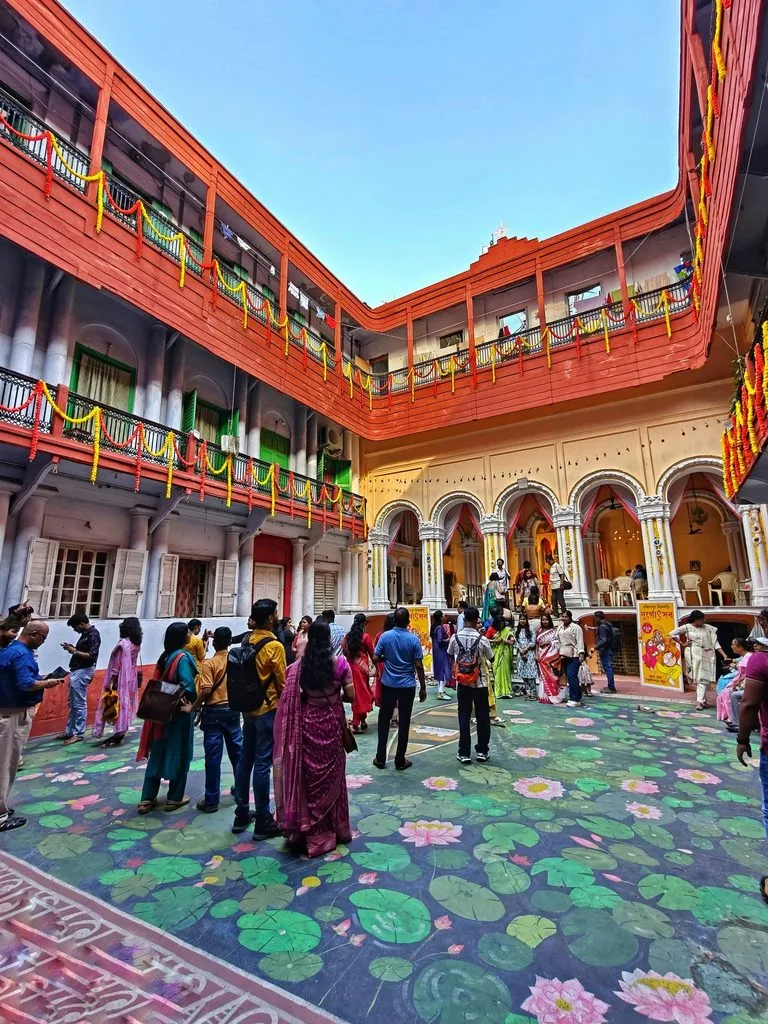
This is one of the oldest Durga Pujas in North Kolkata. It was started around 1770 by Ram Dulal Deb (spelled Dey in some sources), who rose from a modest background to become one of the biggest merchants of his time. His two sons, Chhatu Babu (Ashutosh Deb) and Latu Babu (Pramathanath Deb), gave the puja the name it carries today. The house is called Ramdulal Nibas and stands at 67E Beadon Street (Culture and Heritage).
A few details make this puja special. The idol is ekchala, with all the deities under one frame, and wears the silver-foil daaker saaj. Durga is joined by Jaya and Bijaya here and not by Lakshmi and Saraswati. Animal sacrifice stopped many years ago, and the family now follows a symbolic ritual with chalkumro (ash gourd) and sugarcane. On Dashami, a live nilkantha bird used to be released. That ritual ended because of wildlife protection laws (Kolkata Tour Guide).
Stop 6: Darjipara Mitra Bari
From Beadon Street, it is only about 120 metres to Darjipara Mitra Bari (Pujo Map). I like this house because the family does things differently. Kumari Puja happens every single day, not just on Ashtami. The family lights the sacred hom fire themselves and then passes it on to the priest. The idol’s lion has the face of a horse and is painted white, to show the power of a lion with the speed of a horse (Telegraph India). The puja has run for more than two centuries.
Part 2: Jorasanko
After Darjipara, my slip points to Jorasanko, where two Daw families live a short walk from each other. If you are short of time, this is the pair I would not skip.
Stop 7: Shib Krishna Daw Bari
The puja was started by Gokul Chandra Daw, the father of Shib Krishna, and the house now carries his son’s name. The Daw family was famed for dressing the goddess in lavish jewellery. There is an old Calcutta saying about the three great household pujas: Durga dresses at Shib Krishna Daw’s house, eats at Abhaycharan Mitra’s house in Kumartuli and stays up to watch the dance at Shobhabazar Rajbari (Outlook Traveller).
Plan to be in the courtyard before Sandhi Puja on Monday 19 October. The last 24 minutes of Ashtami and the first 24 minutes of Navami are the hinge of the whole festival.
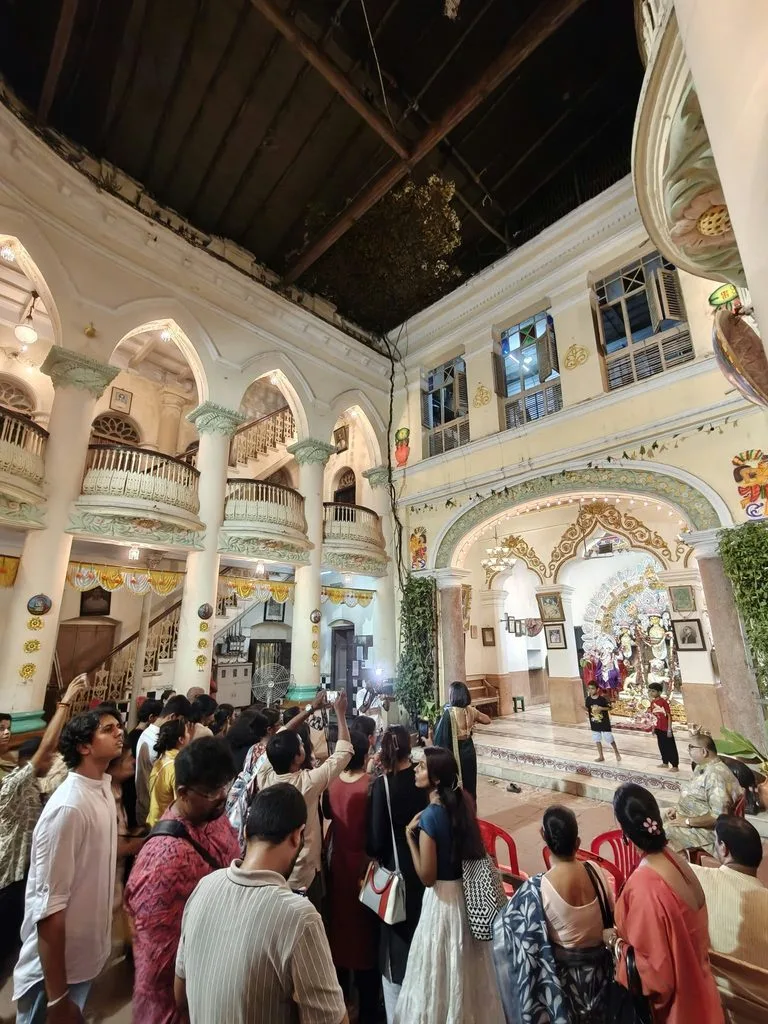
Stop 8: Banduk Daw Bari
“Banduk” means gun, and this is the house the name comes from. In 1835, Narasingha Chandra Daw started an arms business in British Calcutta. After the 1857 uprising, when business was booming, he decided to hold a Durga Puja. The house is now at 22A Vivekananda Road and is known as the Banduk Bari (Anandabazar).
This house has some of the most interesting rituals on the whole list:
- No rice offering. The goddess is offered ghee luchi, and gaja, pantua and mihidana made in the house kitchen.
- Saptami dawn procession. Men of the family carry the navapatrika to the Ganga under a velvet umbrella on a silver rod, guarded by four men with drawn swords. The family needs police permission for it.
- Guns at Sandhi Puja. The family still fires guns at the start and end of Sandhi Puja.
- Dhuno on Ashtami evening. An odd number of older women sit with burning dhuno on earthen plates, and a hush falls over the dalan.
- Dashami. A nilkantha bird used to be released, but that ritual has stopped. Before immersion, one kalka is removed from the chalchitra, and the family keeps it as the goddess’s promise to return.
Another local source describes the idol as ekchala, in the traditional style (Trek Break & More).
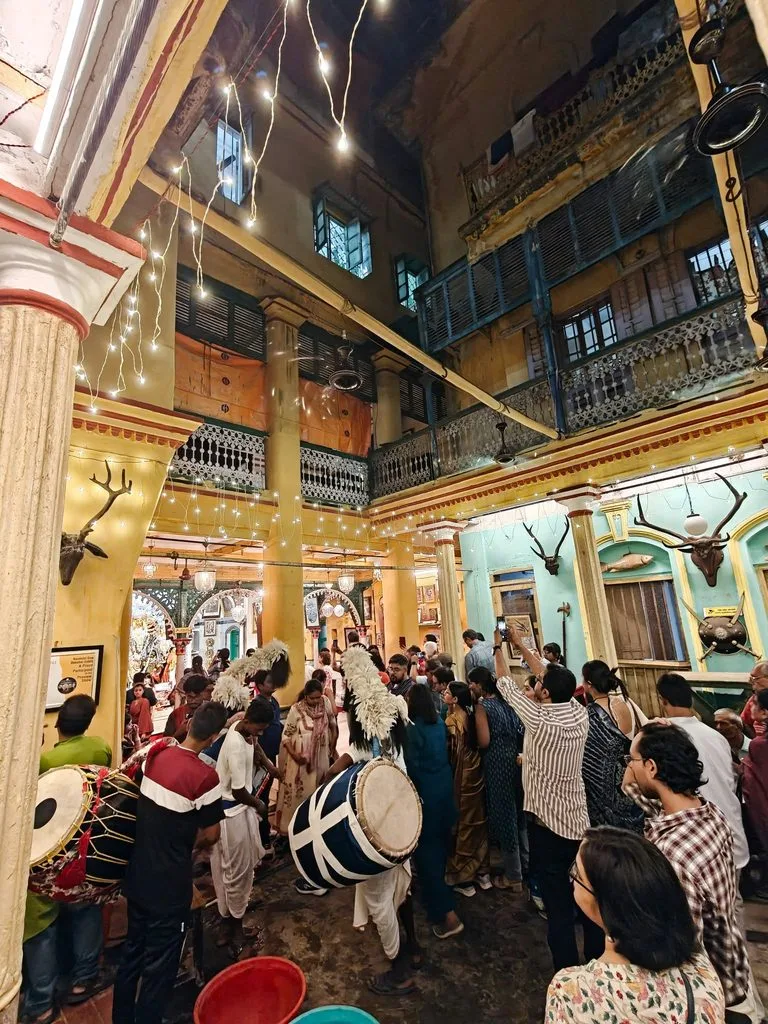
Part 3: Pathuriaghata
Pathuriaghata is one of the oldest residential areas of what was once Sutanuti, and it is still full of colonnaded mansions. It was once the home of the Bengali rich, and now the area is largely Marwari (Wikipedia). The last five houses on my slip are along this stretch.
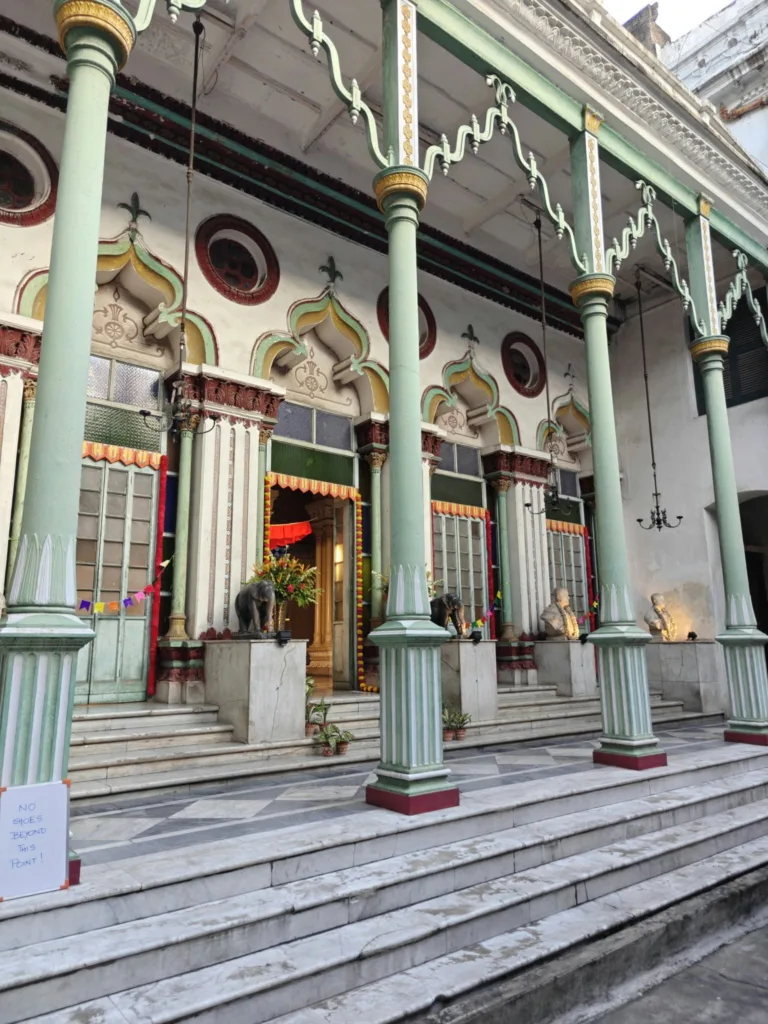
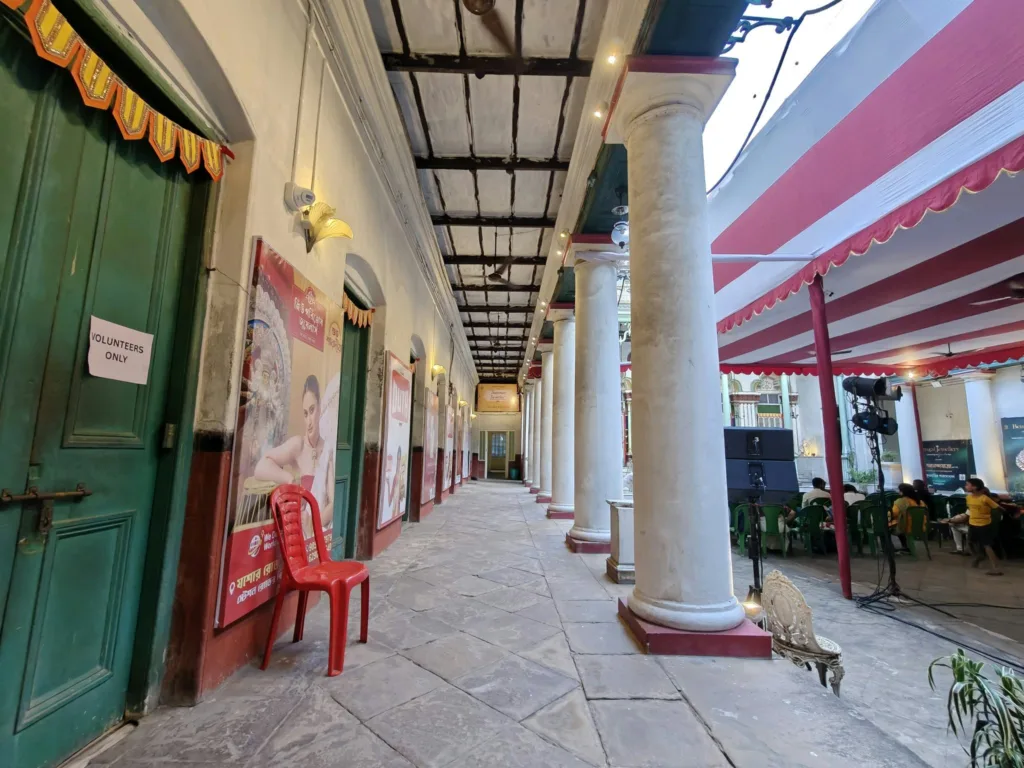
Stop 9: Tagore Palace
This one is different. The Tagore Palace on Prasanna Kumar Tagore Street is a 140-year-old home, and the family that lives here comes from the Pathuriaghata branch of the Tagores, descendants of Darpanarayan Tagore. The Tagores of Jorasanko come from his brother, Nilmani (Telegraph India).
Durga Puja here no longer follows a ritual calendar. Instead, the family hosts Thakurbarir Sarodotsav, a festival of music, dance and theatre that began in 2022, organised by Souraja Tagore. In 2024, a dance drama replaced the bodhan and a Rudra Veena recital replaced the sandhya arati. The goddess is immersed after an Ananda Yatra on the last day (Telegraph India). The Pathuriaghata Tagores worshipped Durga here until the first decade of this century, and the ritual puja has since stopped (Hindu Blog).
The Tagores were big patrons of theatre. Their “Tagore Castle” hosted the Banga Natyalaya from 1859 to 1872 (Wikipedia).
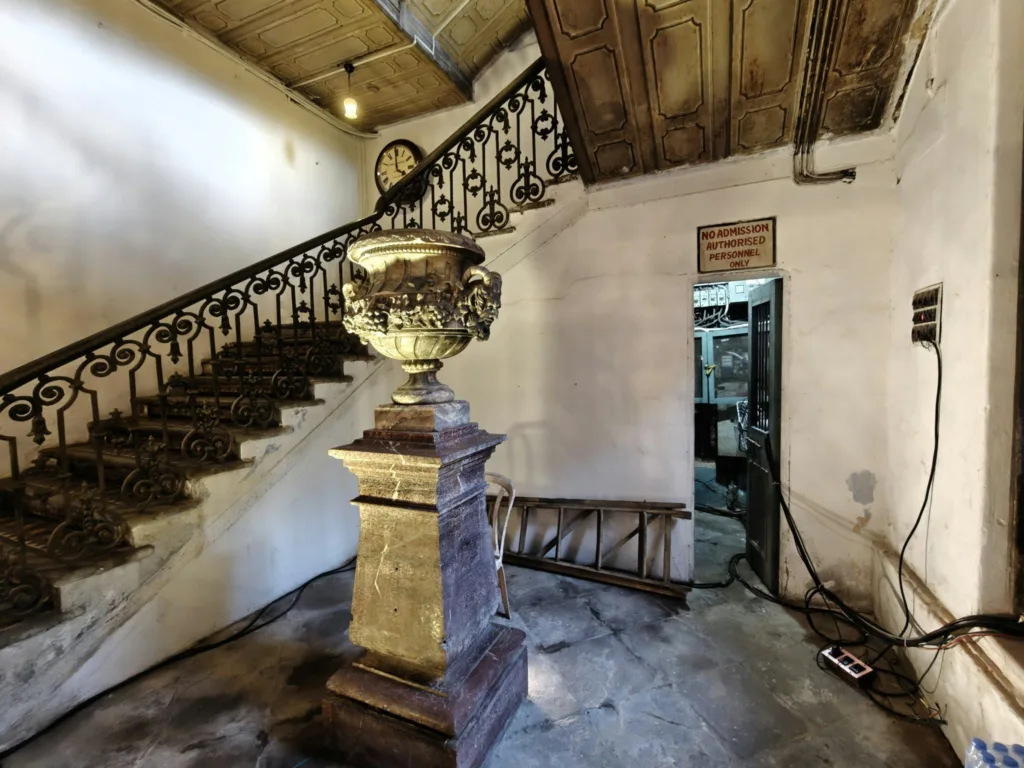
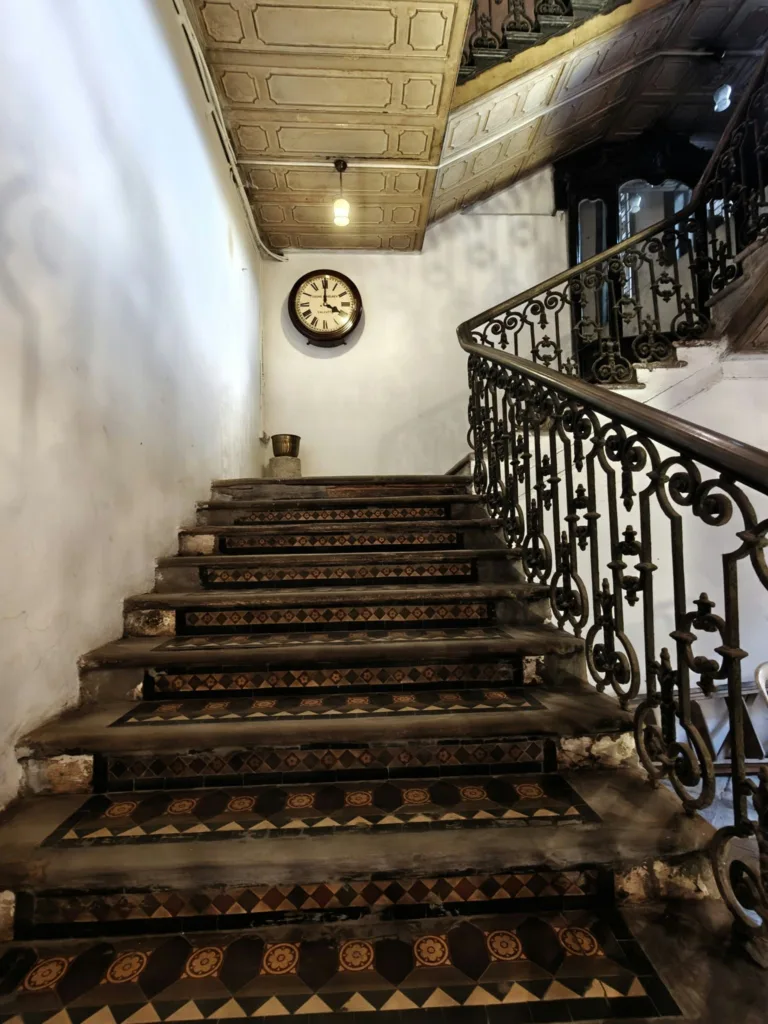
Stop 10: Jadunath Mullick Bari
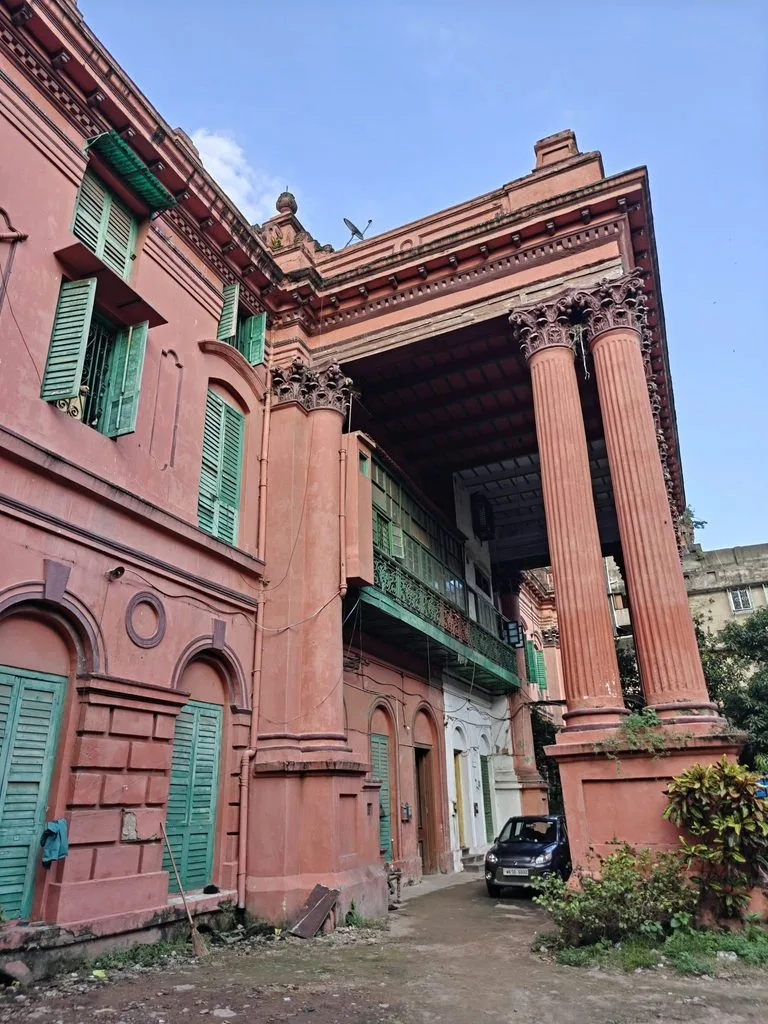
Next to the turrets of Tagore Castle on Prasanna Kumar Tagore Street is a Mullick house topped with classical statuary, so look up as you walk (Wikipedia). The Pathuriaghata Mullick Bari is known for one of the most graceful thakur dalans in North Kolkata, framed by a series of iron arches. The family’s deity is Maa Singhabahini (Tutorial At Home).
Stop 11: Manmatha Ghosh Bari
The Ghosh family puja actually began here. Ramlochan Ghosh started it in the family’s old house at No. 46 Pathuriaghata Street in the late 18th century, around the 1780s. Later, his grandson built the mansion at No. 47 and moved the puja there (Kolkata Durgotsav).
Stop 12: Khelat Ghosh Bari, 47 Pathuriaghata Street
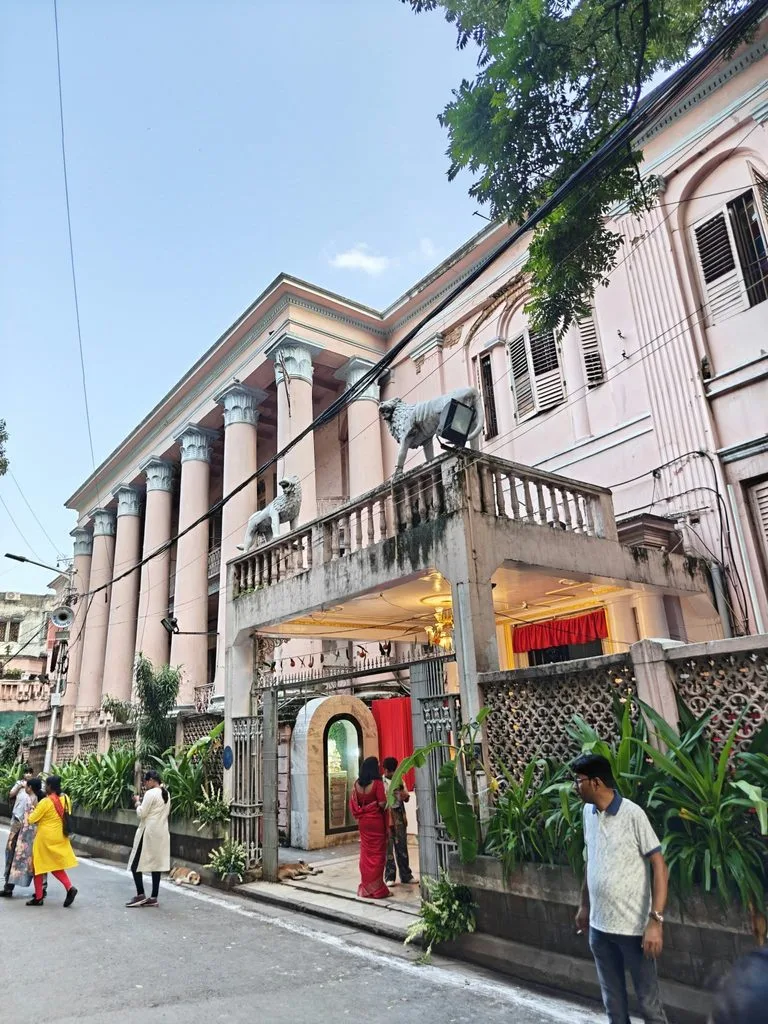
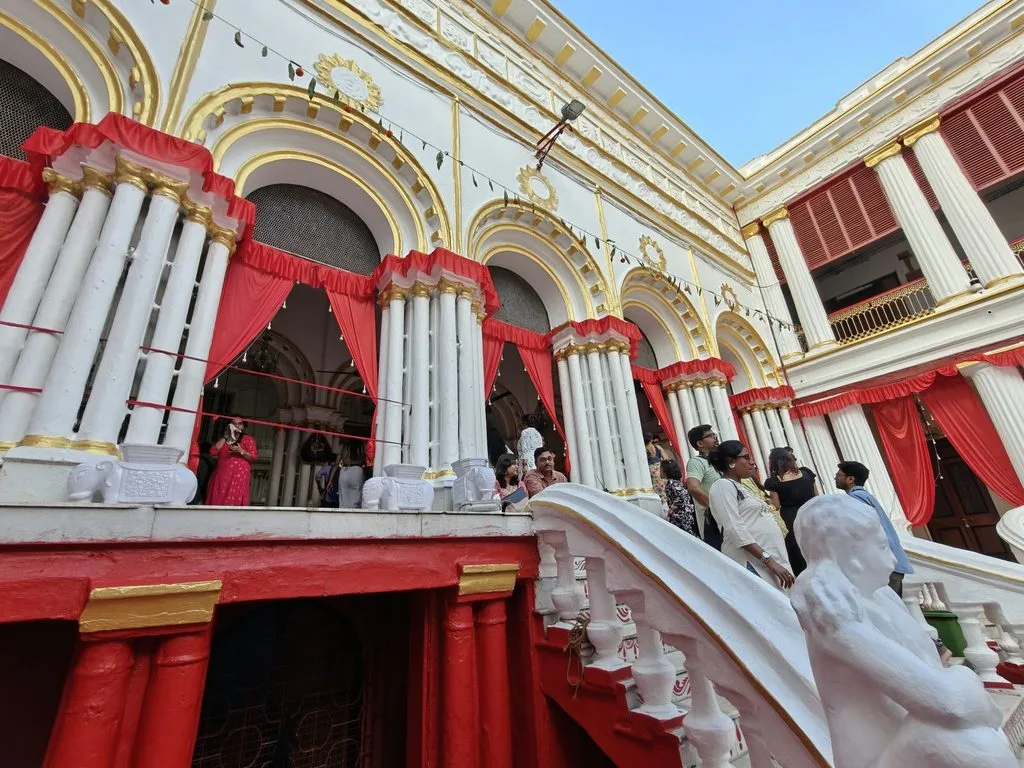
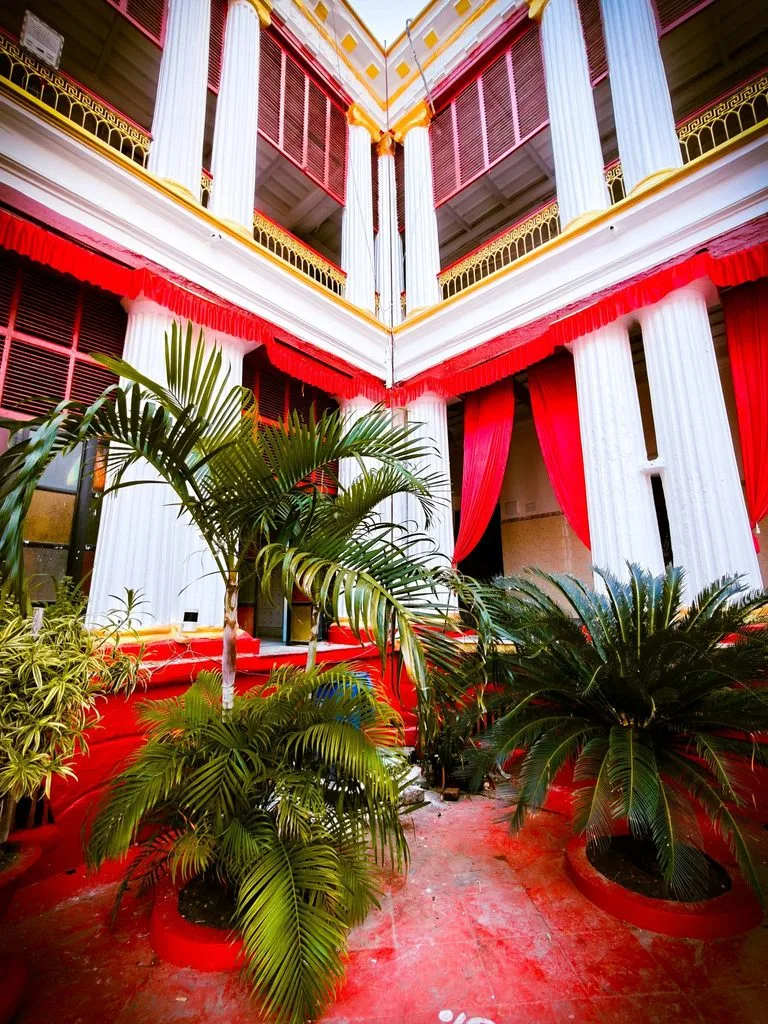
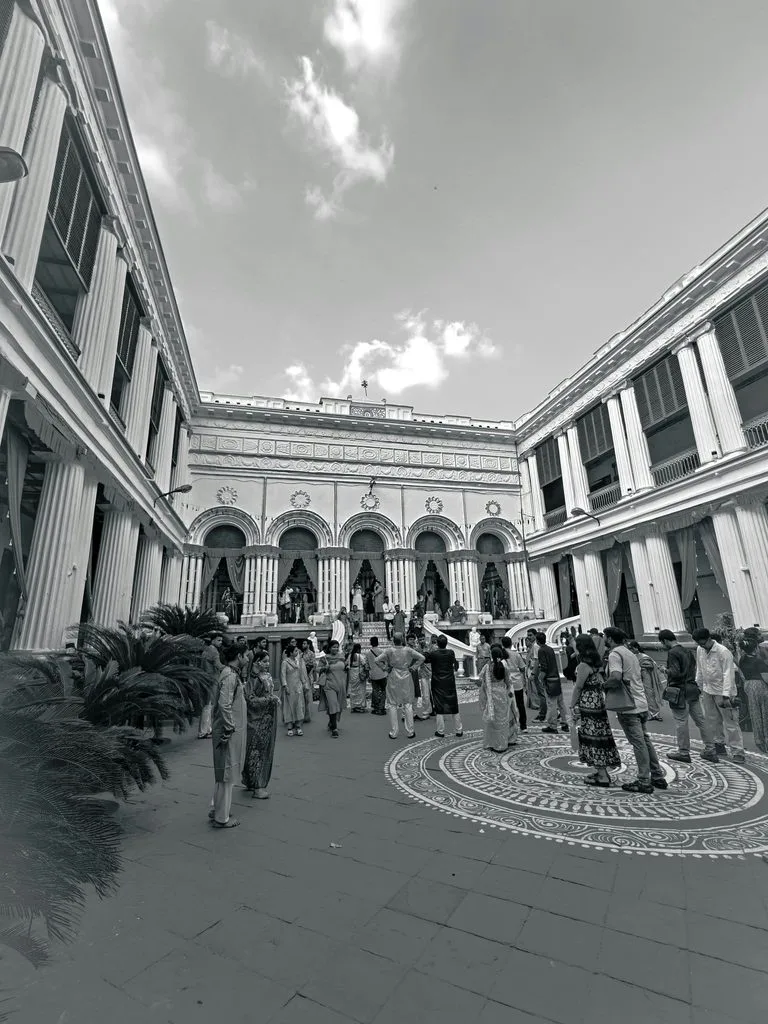
This is the grand one. Khelat Chandra Ghosh built the mansion at No. 47 between 1844 and 1846 and shifted the family puja there. Most published sources describe it as about 168 years old, and some date its continuous celebration in this house to 1858. The thakur dalan is large and ornate, and the house is still associated with classical arts because Khelat Chandra Ghosh was a noted exponent of Indian classical music and dance (Kolkata Durgotsav). The address is 47 Pathuriaghata Street, near Chitpur Lohia Matri Sadan.
Stop 13: Harakutir, 53 Pathuriaghata Street
We saved the oldest for last. The Harakutir Ray-Banerjee Bari at 53 Pathuriaghata Street says its puja is over 330 years old (Telegraph India). The story goes that the house stands on what used to be a cremation ground. When the family’s ancestor Keshab settled here, he found a small 11-inch ashtadhatu idol of Durga already there, took it as a good sign and started worshipping. The family says the present form of the goddess came from a dream of Hara Prasad Bandyopadhyay, a dhrupad singer and the fourth in the line (Indulge Express).
A few things to look for:
- The idol is made from scratch inside the house. The work starts just after Janmashtami, and the eyes are painted the day before Mahalaya.
- The thakur dalan has five arches that blend Italian Neoclassical and Islamic styles. The family says the marble came from the same batch used at Fort William and the Victoria Memorial.
- The men of the house cook the bhog. There are five kinds of bhaja and 13 kinds of sweets.
- Music runs through the house. The family links it to classical baithaks, and to musicians such as Jadu Bhatta, and says part of the music for Vande Mataram was developed at one of these gatherings. I would present that as the family’s account.
The house now also hosts pop-up dhunuchi events, photography shows and art events (Telegraph India).
Plan it: two mornings or one long day
- Morning 1 (stops 1 to 8): Colootola, Thanthania, Beadon Street, Darjipara and the two Daw houses in Jorasanko.
- Morning 2 (stops 9 to 13): Tagore Palace, Jadunath Mullick Bari, the two Ghosh houses and Harakutir, all within Pathuriaghata.
- One long day: Do everything in order, take a lunch break after Darjipara and finish before dark.
- Ashtami special: Be at a Daw house in Jorasanko before Sandhi Puja on Monday 19 October.
- Evening: Switch to pandals. Our North & Central Kolkata pandal hopping guide and our South Kolkata Durga Puja guide will take care of the rest.
Etiquette: how to visit a Bonedi Bari without being a nuisance
- These are family homes. Go in the daytime, keep your voice low and say hello.
- Ask before you photograph people, rituals or the idol.
- Check that the house is open to visitors this year before you set out.
- Wear shoes you can take off easily. Carry water, a power bank and some cash.
- Fix a meeting point with your group. Phone networks can jam in a crowd.
More famous Bonedi Baris that are not on my slip
If you have another day, add these. I have not covered them in this route.
- Shobhabazar Rajbari: Raja Nabakrishna Deb held a lavish Durga Puja here in 1757, within months of the Battle of Plassey, and invited the British. It is the Bonedi Bari most guides start with (Outlook Traveller).
- Janbazar Rajbari: Rani Rashmoni’s own family puja, listed as a must-see by KolkataKhoj.
- Sikdar Para Mullick Bari, Jorasanko: Started in 1866 by Shib Chandra Mullick. The goddess is worshipped as the daughter of the house, the lion is white and the puja begins on Pratipada (Culture Today).
- Sabarna Roy Chowdhury Aatchala, Barisha: Established in 1610, it is considered Kolkata’s oldest family Durga Puja (Kolkata Tour Guide).
- Behala Jagat Ram Mukherjee Bari: Famous for its Golden Durga, the Sonar Durga, since 1769 (Kolkata Tour Guide).
- Bhukailash Rajbari, Khidderpore: A royal puja founded by Raja Jaynarayan Ghoshal in the 18th century (Kolkata Tour Guide).
- Jhamapukur Chandra Bari: Established in 1761 and known for a rare idol of Durga seated on Shiva’s lap (Kolkata Tour Guide).
Want a village version of this? Try Dhanyakuria
If the city lanes are not enough, take the Bonedi Bari idea out of Kolkata. Dhanyakuria in North 24 Parganas is about 50 km and two hours from the city, with European-style mansions and zamindar pujas. Entry is free and you need around four to five hours. We have a full guide here: Dhanyakuria Day Trip During Durga Puja: Rajbari Guide, Route & Itinerary (2026). You can also browse everything under our dhanyakuriya tag.
Frequently asked questions
What is a Bonedi Bari Durga Puja?
It is the household Durga Puja of an old aristocratic family in Kolkata, held in the family’s own thakur dalan.
How many Bonedi Baris can I see in one day?
On this route, I would split the 13 houses into two mornings. The first eight are in Colootola, Thanthania, Beadon Street, Darjipara and Jorasanko, and the last five are along Pathuriaghata Street.
Which Bonedi Bari fires guns at Sandhi Puja?
The Banduk Daw Bari on Vivekananda Road in Jorasanko. The family still fires guns at the start and end of Sandhi Puja.
Is entry to a Bonedi Bari free?
Many houses receive visitors during Puja without a ticket, but they are private homes. Check each house before you go.
What is the nearest metro station?
Girish Park on the Blue Line for most of the route. Sovabazar Sutanuti is also close to Pathuriaghata.
When is Durga Puja 2026?
From 16 to 21 October 2026, with Maha Ashtami on Monday 19 October.
Final thoughts
Pandal hopping is great fun, and we will keep doing it. But the oldest part of Durga Puja is in those courtyards, and it is quieter than you expect. Keep a list in your pocket, ask for directions when you are lost, and let the lanes surprise you. If you do this route, tell us in the comments which house became your favourite.
More Kolkata trips and Puja guides are on NeonBrothers.

Pingback: Dhanyakuria Day Trip During Durga Puja: Rajbari Guide, Route & Itinerary (2026) | NeonBrothers